
CareVantaRCM

Optimize Revenue. Reduce Denials. Strengthen Practice Growth.

Author name: carevantarcm

revenue cycle management
Blog

What is Revenue Cycle Management? A Complete Guide to RCM Services

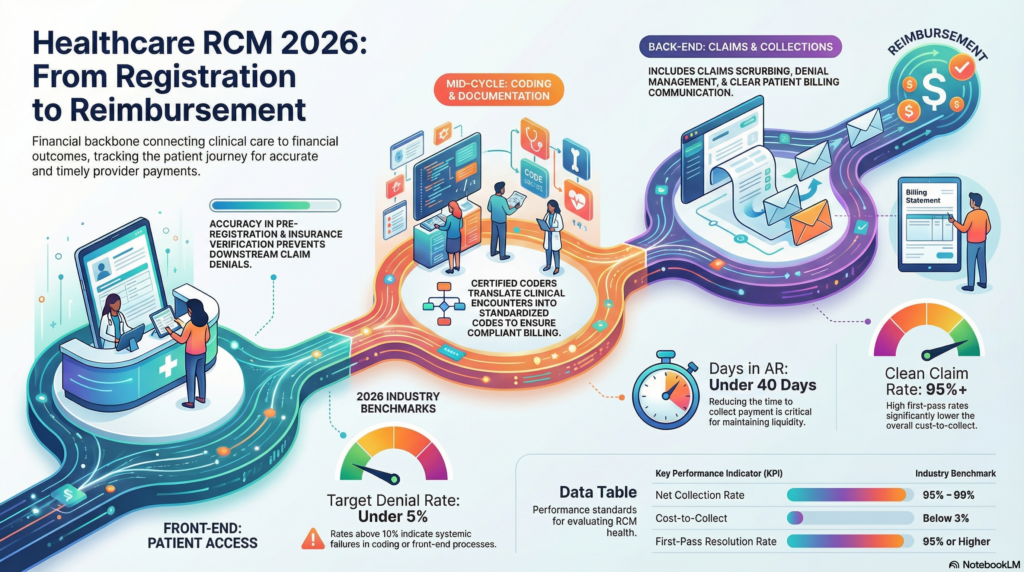
Introduction If your healthcare organization is losing money to claim denials, billing errors, or slow reimbursements, the problem likely lives inside your revenue cycle. Revenue cycle management (RCM) is the financial backbone of every healthcare practice — from the moment a patient schedules an appointment to the moment the final payment clears. In this complete 2026 guide, we break down everything you need to know about RCM services: what they are, how they work, why they matter, and how the right revenue cycle management services can transform your organization’s financial health. Whether you’re a hospital CFO, a private practice manager, or a healthcare administrator, this guide is built for you. What Is Revenue Cycle Management? Revenue cycle management is the process healthcare providers use to track patient care episodes — from registration and appointment scheduling all the way through to final payment collection. It encompasses every administrative and clinical function that contributes to the capture, management, and collection of patient service revenue. In simpler terms, RCM connects the clinical side of healthcare with the financial side. It ensures that for every service delivered, the provider gets paid accurately and on time. The “revenue cycle” begins when a patient first contacts a provider and ends when the account balance reaches zero — either through insurance reimbursement, patient payment, or a combination of both. Key Components of the Revenue Cycle The revenue cycle is not a single process. It is an interconnected chain of steps, each of which must function correctly for the whole system to work: When any one of these steps breaks down, revenue leaks out of the system — and that leakage adds up fast. Why Revenue Cycle Management Matters in 2026 The stakes for healthcare revenue management have never been higher. Payer rules grow more complex every year, coding requirements evolve, and patients are shouldering larger portions of their care costs through high-deductible health plans (HDHPs). According to industry data, healthcare providers write off billions of dollars annually due to claim denials, billing errors, and uncollected patient balances. A well-structured revenue cycle management system directly addresses these losses. Here is why RCM has become mission-critical for modern healthcare organizations: Rising claim denial rates. Payers are denying more claims than ever before, often for technical reasons that could have been prevented. Every denied claim costs money to rework — and some are never recovered at all. Increased patient financial responsibility. With more patients enrolled in HDHPs, practices must now collect significant sums directly from individuals — a process that requires clear billing communication, flexible payment options, and proactive outreach. Regulatory complexity. Compliance requirements around coding, documentation, and billing continue to evolve. Errors can result in audits, repayments, or penalties. Staffing pressures. Finding and retaining skilled billing staff remains a major challenge. Outsourced or tech-enabled RCM services help bridge this gap without sacrificing quality. Thin operating margins. Hospitals and practices are operating on tighter margins than ever. Maximizing revenue capture is essential to financial sustainability. What Are RCM Services? RCM services refer to the full suite of professional solutions designed to manage and optimize the revenue cycle on behalf of a healthcare provider. These services can be delivered by specialized third-party vendors, integrated software platforms, or a combination of both. Think of RCM services as a managed solution for your billing and collections infrastructure — one that brings expertise, technology, and proven processes to replace or augment your in-house capabilities. Types of RCM Services Available 1. End-to-End Revenue Cycle Management Services These comprehensive solutions handle the entire revenue cycle — from patient access through final payment. Providers hand off the full billing and collections function to a specialized partner, retaining oversight through reporting dashboards and regular performance reviews. End-to-end revenue cycle management services are ideal for: 2. Front-End RCM Services Front-end services focus on activities that occur before and at the point of care. These include: Getting the front end right is crucial — errors made before a patient ever sees a provider can cascade through the entire revenue cycle and result in denials weeks later. 3. Mid-Cycle RCM Services Mid-cycle services center on documentation and coding: Accurate, complete documentation is the foundation of every clean claim. Mid-cycle RCM services ensure that what happens in the exam room translates correctly onto the claim form. 4. Back-End RCM Services Back-end services focus on claims after submission: For many practices, the back end is where revenue most commonly slips through the cracks. Denied claims that sit unworked age out of timely filing limits, and patient balances that go unpursued become bad debt. 5. RCM Technology Platforms Technology-enabled RCM services increasingly include AI-powered tools that automate repetitive tasks, flag coding errors before submission, predict denial likelihood, and prioritize AR follow-up queues. These platforms integrate with your existing EHR/PM systems and provide real-time visibility into revenue performance. How Revenue Cycle Management Services Work: Step by Step Understanding how revenue cycle management services function in practice helps you evaluate vendors and set realistic expectations for results. Here is a typical workflow: Step 1: Patient Access and Eligibility Verification Before a patient arrives, the RCM team verifies insurance eligibility, checks for active coverage, identifies any authorization requirements, and collects any outstanding patient balances. This step alone eliminates a large category of downstream claim denials. Step 2: Charge Capture and Medical Coding Following the patient encounter, clinical documentation is reviewed and coded by certified medical coders. RCM services employ coders credentialed in CPC, CCS, or specialty-specific certifications to ensure accuracy and compliance. Charge capture audits confirm that every billable service is actually billed — catching missed revenue that would otherwise go uncollected. Step 3: Claims Scrubbing and Submission Before a claim is submitted to a payer, it passes through a claims scrubbing engine that checks for errors: missing information, coding mismatches, incorrect patient demographics, or authorization gaps. Clean claims go out electronically, typically within 24–48 hours of the encounter. Step 4: Payment Posting and Reconciliation When payments arrive from insurers, they are posted to the correct

Medical billing services
Blog

Medical Billing Services: How Outsourcing Improves Revenue Cycle Efficiency for Healthcare Providers

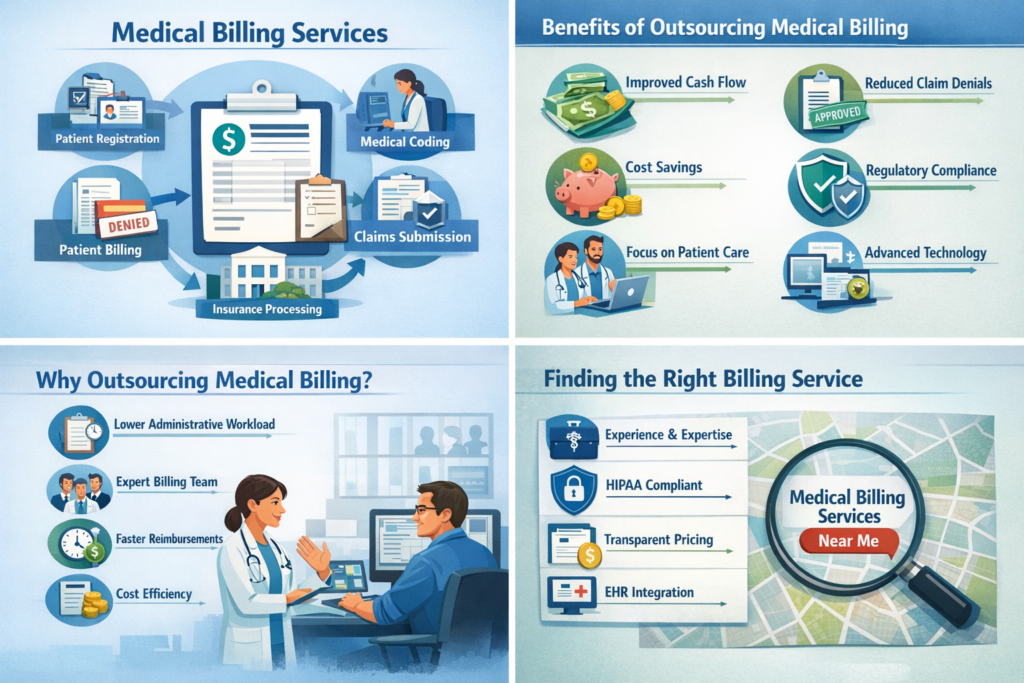
Healthcare providers today face many operational challenges—patient care demands, insurance complexities, and administrative tasks. Among these, managing billing processes accurately and efficiently is one of the most critical responsibilities. Hospitals, clinics, and independent physicians rely on efficient billing operations to maintain healthy cash flow and ensure financial stability. This is where medical billing services play a vital role. Professional billing companies help healthcare organizations manage claims, payments, coding, and insurance communications effectively. Instead of spending valuable time on complicated billing procedures, medical professionals can focus on patient care while experts handle revenue cycle management. In this blog, we will explore what medical billing services are, how they work, the benefits of outsourcing billing operations, and how providers can find reliable medical billing services near me to improve their practice performance. What Are Medical Billing Services? Medical billing services involve managing the financial processes between healthcare providers, insurance companies, and patients. These services ensure that medical procedures performed by doctors are accurately coded, billed, and reimbursed by insurance providers. The billing process usually includes: Professional medical billing services ensure accuracy and compliance with healthcare regulations such as HIPAA and payer-specific requirements. Without efficient billing management, healthcare practices may experience delayed payments, claim denials, and revenue losses. Because billing rules and insurance requirements constantly change, many healthcare providers choose medical billing outsourcing to ensure that their billing operations remain efficient and compliant. How Medical Billing Services Work Understanding how medical billing services operate helps healthcare providers see the value of outsourcing billing tasks. 1. Patient Registration and Insurance Verification The billing process begins when a patient schedules an appointment. Accurate patient details and insurance information are collected to ensure correct claim submission. 2. Medical Coding Healthcare providers document patient diagnoses and procedures. Certified coders convert this information into standardized codes such as ICD-10, CPT, and HCPCS. 3. Claim Creation and Submission Billing professionals prepare claims based on the coded information and submit them electronically to insurance companies for reimbursement. 4. Insurance Review and Payment Insurance providers review claims to determine coverage eligibility. Once approved, payments are sent to the healthcare provider. 5. Denial Management If claims are denied or rejected, billing teams investigate the issue, correct errors, and resubmit claims promptly. 6. Patient Billing Any remaining balance after insurance payments is billed directly to the patient. By outsourcing these steps through medical billing outsourcing, healthcare practices can reduce administrative burden and improve efficiency. Benefits of Medical Billing Services for Healthcare Providers Using professional medical billing services offers many advantages for clinics, hospitals, and independent practitioners. 1. Improved Revenue Cycle Management Professional billing teams ensure that claims are submitted correctly and quickly. This reduces delays and increases the likelihood of faster reimbursements. 2. Reduced Claim Denials Errors in coding or documentation can cause claim rejections. Experienced billing specialists review claims thoroughly to minimize mistakes. 3. Cost Savings Hiring an in-house billing team requires salaries, training, and software investments. Medical billing outsourcing helps healthcare providers reduce operational costs while maintaining high efficiency. 4. Compliance With Regulations Healthcare billing regulations frequently change. Outsourced billing companies stay updated with industry guidelines to ensure compliance. 5. Focus on Patient Care Doctors and medical staff can concentrate on delivering quality care instead of managing billing complexities. 6. Access to Advanced Technology Professional medical billing services often use advanced billing software, analytics tools, and automated systems to improve accuracy and performance. 7. Better Financial Transparency Billing companies provide detailed reports and analytics that help healthcare providers monitor revenue performance. How to Choose the Best Medical Billing Services Finding reliable medical billing services near me requires careful evaluation. Healthcare providers should consider the following factors before selecting a billing partner. 1. Industry Experience Choose a billing provider with experience handling your specific medical specialty. 2. Compliance and Security Ensure that the billing service follows HIPAA regulations and protects sensitive patient data. 3. Transparent Pricing Reliable companies provide clear pricing structures without hidden fees. 4. Technology Integration The billing provider should integrate with your electronic health record (EHR) system. 5. Reporting and Analytics Detailed performance reports help healthcare providers track revenue and billing efficiency. Many clinics search online for medical billing services near me to find trusted providers who understand local healthcare requirements. Why Medical Billing Outsourcing Is Growing in Healthcare Healthcare organizations worldwide are increasingly adopting medical billing outsourcing to streamline operations. Several reasons explain this growing trend: By partnering with expert billing companies, healthcare providers can improve financial performance without expanding their internal administrative teams. In addition, medical billing services near me allow local providers to collaborate with experienced professionals who understand regional payer networks and healthcare systems. Challenges Solved by Medical Billing Services Healthcare providers often struggle with multiple billing-related challenges. Some of the most common issues include: Professional medical billing services address these issues by implementing structured billing workflows and quality control processes. With medical billing outsourcing, healthcare organizations can also scale their operations easily as patient volume increases. Frequently Asked Questions  1. What are medical billing services? Medical billing services manage the process of submitting healthcare claims to insurance companies and ensuring that providers receive accurate reimbursement for medical services. 2. Why should healthcare providers consider medical billing outsourcing? Medical billing outsourcing helps reduce administrative workload, improve billing accuracy, lower operational costs, and increase revenue cycle efficiency. 3. How do I find reliable medical billing services near me? Healthcare providers can search online, review service providers, and evaluate their experience, technology, compliance standards, and customer support. 4. Are medical billing services suitable for small clinics? Yes. Small clinics benefit greatly from medical billing services because outsourcing allows them to access professional billing expertise without hiring a large in-house team. 5. How do billing companies reduce claim denials? Experienced billing teams review documentation, verify insurance information, and ensure accurate coding before submitting claims. 6. Is patient data safe with outsourced billing services? Reputable medical billing outsourcing companies follow strict HIPAA compliance standards and use secure systems to protect patient data.

Blog

The Role of Technology in Transforming Revenue Cycle Management

Technology is rapidly transforming healthcare operations, and Revenue Cycle Management is no exception. Modern RCM solutions are helping healthcare providers streamline billing processes and improve financial transparency. Automation in RCM Automation reduces manual errors and speeds up processes such as eligibility verification, claim submission, and payment posting. Automated systems help staff focus on more critical tasks instead of repetitive administrative work. Data Analytics and Reporting Advanced analytics tools provide real-time insights into financial performance, denial trends, and reimbursement patterns. These insights help healthcare providers make informed decisions and improve operational efficiency. Patient Experience Enhancement Technology also improves patient satisfaction by offering transparent billing, online payment options, and accurate insurance estimates. A better patient financial experience leads to improved trust and engagement.

Blog

How Denial Management Improves Healthcare Revenue

Claim denials are one of the biggest challenges healthcare organizations face today. Without proper denial management, providers may experience significant revenue losses and increased administrative workload. What is Denial Management? Denial management is the process of identifying, analyzing, correcting, and resubmitting denied insurance claims. It helps healthcare organizations recover lost revenue and prevent future claim rejections. Major Causes of Claim Denials Common reasons for claim denials include incorrect patient information, coding errors, missing documentation, eligibility verification issues, and late claim submissions. Identifying these root causes is essential for long-term financial improvement. Strategies for Effective Denial Management Healthcare providers can reduce denial rates by improving documentation accuracy, using updated coding standards, verifying patient insurance details, and implementing automated claim tracking systems. Regular performance monitoring also helps in minimizing recurring errors.

Blog

Why Revenue Cycle Management is Critical for Modern Healthcare Practices

In today’s fast-evolving healthcare environment, maintaining financial stability is just as important as delivering quality patient care. Revenue Cycle Management (RCM) plays a vital role in ensuring healthcare providers receive timely and accurate reimbursements while maintaining smooth operational workflows. Understanding Revenue Cycle Management RCM covers the complete financial journey of a patient, starting from appointment scheduling and insurance verification to claim submission, payment posting, and denial management. A well-managed revenue cycle reduces errors, improves efficiency, and ensures consistent cash flow. Common Challenges Healthcare Providers Face Many healthcare practices struggle with claim denials, delayed reimbursements, and billing errors. Incomplete patient data, incorrect coding, and lack of follow-up often lead to revenue loss and administrative burden. Benefits of Professional RCM Services Outsourcing RCM services helps healthcare providers improve billing accuracy, reduce administrative workload, and focus more on patient care. Advanced analytics and automation tools also help identify revenue gaps and improve decision-making.

Scroll to Top